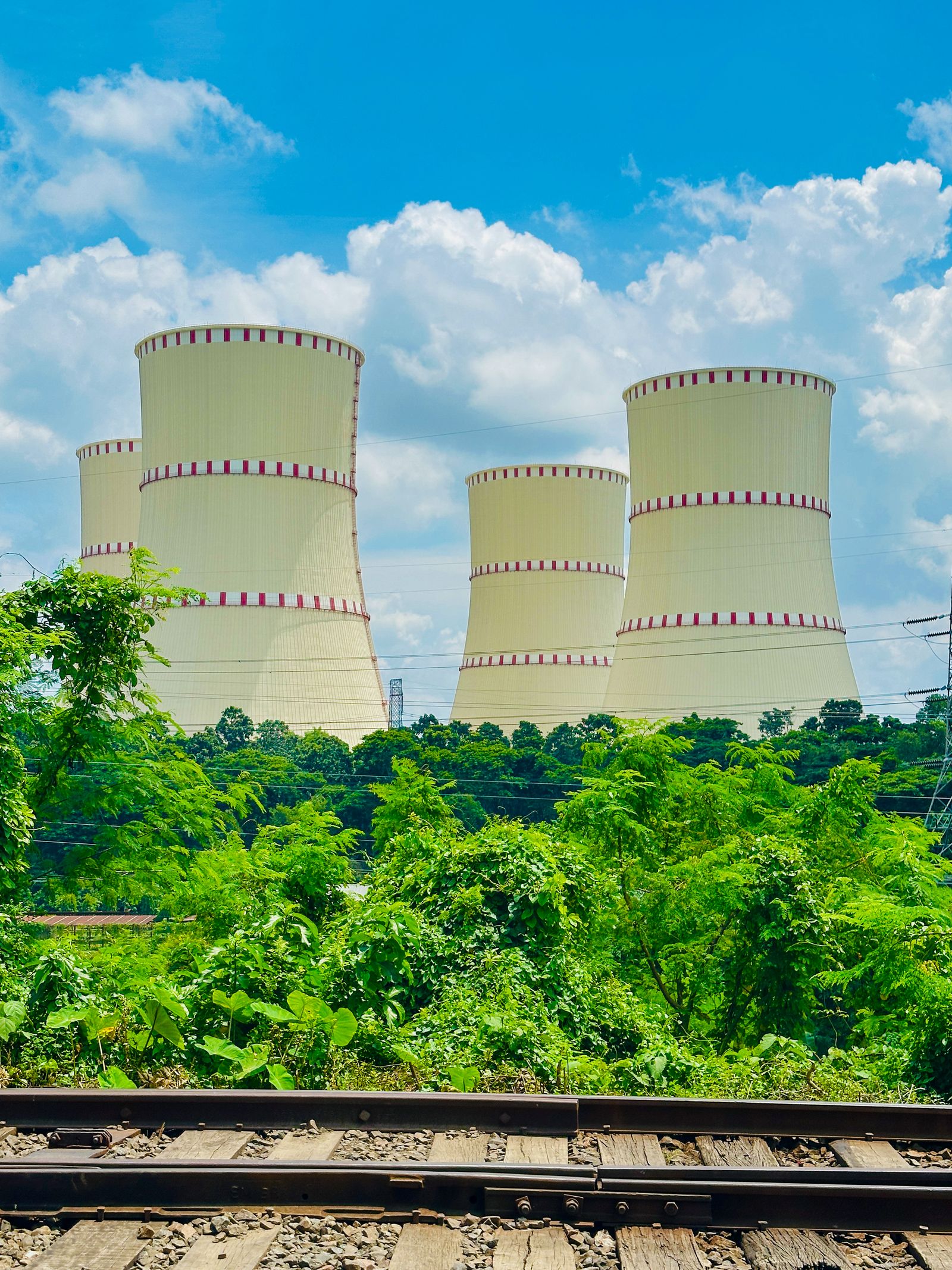
Photo via Pexels
Periodic power interruptions, commonly referred to as load shedding, remain a recurring feature of Bangladesh's national grid, particularly during peak demand months when generation capacity is stretched by high temperatures and gas supply constraints. For a buyer sourcing apparel from the country, this is not an abstract infrastructure issue — it has direct, practical effects on production timelines, factory operating costs, and ultimately delivery reliability.
This piece covers how power interruptions actually disrupt a production schedule, why exposure varies significantly from one factory to the next, the costs buyers rarely see reflected on an invoice, and what questions are worth asking a sourcing partner before placing an order during a period of grid strain.
How Power Interruptions Actually Disrupt a Production Timeline
The immediate effect of an unplanned outage is straightforward: cutting, sewing, and finishing lines stop the moment grid power drops, and restart time depends entirely on whether the factory has automatic backup generation or must manually start diesel generators. A factory without reliable backup can lose a meaningful portion of a working shift to a single extended outage, and repeated outages across a week compound into real schedule slippage on an order already running against a fixed shipment date.
Beyond direct downtime, unstable power affects processes that are sensitive to interruption rather than simple stoppage — dyeing and finishing in particular, where a mid-cycle power loss can affect dye uptake consistency or require restarting a batch entirely, adding cost and time beyond the outage itself.
Why Some Factories Are More Exposed Than Others
Exposure to load shedding is not uniform across the industry. Factories located in export processing zones and larger industrial parks generally sit on priority grid feeds with materially fewer scheduled interruptions than the general residential and commercial grid, since the government has historically prioritized export-oriented manufacturing zones for grid stability. Factories outside these zones, particularly smaller or older facilities in less industrial areas, are more exposed to the general load-shedding schedule.
Backup capacity is the second major variable. A factory with sufficient diesel or gas generator capacity to run the full production line — not just lighting and critical safety systems — can largely absorb a grid outage with minimal schedule impact, at the cost of higher fuel expense. A factory with partial or insufficient backup capacity must either slow production during an outage or stop entirely, and this difference in resilience is rarely visible to a buyer who has not specifically asked about it.
Two factories can quote an identical lead time for the same order. Only one of them has the generator capacity to actually hold that timeline through a week of scheduled outages.
The Cost Buyers Rarely See on an Invoice
Diesel generator operation is expensive relative to grid electricity, and a factory running extended backup power during a load-shedding period absorbs meaningfully higher energy costs per unit of production. Some of this cost is absorbed by the factory as a normal operating expense; during periods of severe or prolonged grid strain, it can also surface as pressure for a mid-order cost adjustment, particularly on thin-margin orders that were quoted assuming standard grid costs.
There is also an indirect cost in missed or compressed delivery windows. A factory that loses production days to load shedding without adequate backup may compress the remaining schedule by cutting quality control stages short to recover time — precisely the scenario where in-line inspection becomes even more important, not less, during a period of grid instability.
What to Ask Before Placing an Order During Peak Load-Shedding Season
Buyers evaluating a factory or sourcing partner during a period of known grid strain should ask directly what generator backup capacity exists relative to full production load, not just whether backup power exists at all. It is also worth asking whether the factory sits within an export processing zone or industrial park with a priority grid feed, since this materially changes actual exposure regardless of what backup equipment is on site.
Finally, buyers should ask how a factory's quoted lead time accounts for the current load-shedding schedule, if any — a lead time quoted without reference to known grid conditions is a lead time that has not actually priced in the risk.
How ansco. Manages Power Reliability Across Its Factory Network
For buyers managing production through ansco., factory selection and order placement take generator backup capacity and grid-zone status into account as a standard part of vendor evaluation, not an afterthought raised only when an outage has already caused a delay. This means favoring factories with backup capacity sufficient for full production continuity, and building realistic buffer into quoted lead times when grid conditions are known to be strained, rather than quoting an optimistic timeline that assumes uninterrupted power.
Load shedding is a real and recurring operating condition in Bangladesh, not a rare disruption — and buyers who ask about generator capacity and grid-zone status up front are meaningfully better positioned to hold a delivery date than those who discover a factory's exposure only after an order is already delayed.
Sourcing during a period of grid uncertainty?
Talk to ansco. about how factory selection accounts for power reliability across your production network.
Get in touch